
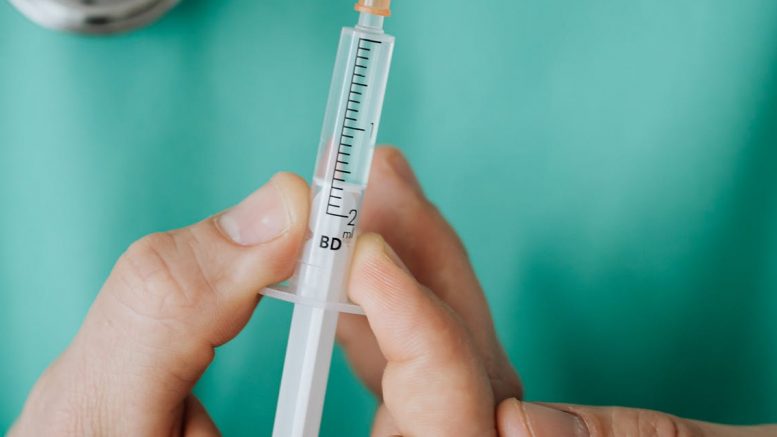
Based on figures announced by Taoiseach Michéal Martin this morning, it appears as though Ireland’s vaccine rollout will be painfully slow, and will inevitably mean that restrictions will remain for longer than would otherwise be necessary.
The headline figure of 135,000 is used to quickly convince the casual reader that the plan is impressive. 135,000 is a big number. People like big numbers but it needs to be examined more closely.
First of all, An Taoiseach said ‘up to’ 135,000 people. Let’s assume for the sake of calculations that this 135,000 target will be reached. Each person will be given 2 doses each. This equates to 270,000 doses before the end of February. Impressive? Let’s see:
- We started vaccinating on December 29th
- There are 62 days between December 29th and the end of February
- To administer 270,000 doses in 62 days, we need an average of about 4,355 doses per day
- There are 24 hours per day. This equates to about 181 doses per hour across the entire country.
- There are 26 counties in the Republic. This equates to an average of under 7 doses, per county, per hour. Seven!!!
- To vaccinate the Irish population of 4,937,786 people, it will take 9,875,572 doses. At this speed of 135,000 doses per month, it would take 6 years and 1 month to vaccinate the whole population.
In a Co.Wexford context:
- The population of Co.Wexford is about 3% of the total Irish population.
- If we receive a 3% share of numbers vaccinated, we will have just 8,000 doses administered in the County by the end of February.
- That’s an average of less than 6 doses in Co.Wexford per hour. Six!!!
So why such a painfully slow roll-out of the vaccine? There are a number of possibilities, but one in particular is that the Irish government abdicated responsibility for vaccine procurement to the EU. The EU have made a mess of this vaccine procurement, and it appears as though the Irish government are simply too afraid of upsetting the EU to go and source our own vaccine supplies.
Given Ireland’s status as a hub of pharmaceutical innovation, it is baffling that we should have decided to leave our fate in the hands of EU bureaucrats. Countries such as the UK, US and Israel are surging ahead in terms of vaccine rollout and will therefore be able to return to normal more quickly and at a lesser cost to society.
Journalist Bojan Pancevski, European correspondent for the Wall Street Journal, has a very informative thread on twitter which explains clearly how dysfunctional the EU have been in terms of vaccine procurement:
In a time where we have essentially been placed in an open prison within 5kms of our homes, and have had to endure the removal of most basic rights and freedoms afforded to us under the constitution, it is not unreasonable to expect that the main remedy to the situation (i.e. vaccination) is rolled out at high speed on a 24/7 basis, and that no stone is left unturned to secure as many doses as possible. No stone.
Many people would happily take a vaccine appointment at 3.30am if it means we can be back to normal more quickly.
Vaccines need to be bought and delivered in any way possible and rolled out on a 24/7 basis. As of today there are 335,599 people in receipt of the Pandemic Unemployment Payment. There is no excuse for not having the staff available to achieve 24/7 high speed vaccine rollout.
Will vaccine rollout speed increase? That will depend on the amount of vaccine we can secure, but one would expect that the speed of rollout can be significantly increased, and it needs to be. However, it is not a good start and lots of ground has been lost due to bad planning and a poor procurement process.
Be the first to comment on "Vaccine Rollout Will Take 6 Years At Current Speed"